
Our Story
We figured it out. Eventually. And that's exactly why I'm here.
I raised three neurodiverse children to adulthood before any of us had a word for what we were navigating. This is not a story about what I missed. It’s a story about what I saw — and what I built — before the language caught up.
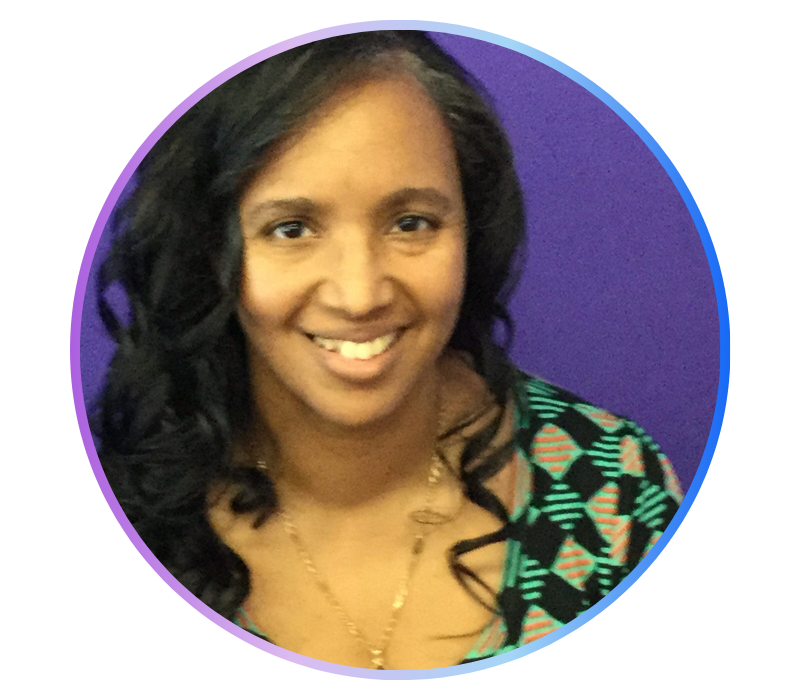
I always looked at my children as individuals first. When a behavior puzzled me, I asked them about it. I listened. I adjusted. I didn’t need a diagnosis to tell me that my eldest daughter learned best when her whole body was involved, or that my son needed things a certain way, or that my middle child would find a loophole in any rule that didn’t make sense to her — and she’d be completely right to do it.
What I had, without knowing it, was a front-row seat to three very different neurodiverse minds — and twenty years of working out how to help each of them grow into themselves.
The three of them
My eldest daughter was a kinesthetic learner — lessons had to move. She wanted to be Cam Jansen and worried about her memory from a young age, and later speech therapy helped with some things but not others.
What we didn’t know then was that her AuDHD brain was simply not retaining details in short-term memory in the first place. She can’t remember what she never took in. After her diagnosis, that finally made sense. She also survived a serious head injury as a child, which complicated everything — including, for a time, the possibility of an autism diagnosis that a neurologist raised and that I wasn’t ready to hear. That’s one of the things I carry.
My middle daughter is academically gifted, sharp with words, and deeply focused on animals — every analogy eventually loops back to the animal kingdom. When she was small, she asked me things like, “How do you know when it’s okay to hug someone?” I thought the question was a little off-base. Now I understand it was her working out the social world the only way that made sense to her: logically, precisely, from first principles. She also wrote on my bedroom wall once — and informed me it was my fault, because I had said nothing about pencils. She was right, technically. She still is, usually. (shhh)
My son was, in some ways, the clearest picture from early on — the running, the sensory needs, the way he needed things to be a certain way. Bath time was a whole event. He was also deeply emotional and, for a while, could not distinguish a joke from a verbal attack. We worked on that together for years — emotional regulation, empathy, seeing both sides. He was the most reluctant to get an official diagnosis, worried it might change how he saw himself. It didn’t. He says now that understanding himself better helps him manage his feelings, which is exactly what I hoped for him.
They were all diagnosed as adults — my son at 18, after his 35-year old sister’s ADHD diagnosis prompted him to get evaluated. My eldest daughter at 26, along with the AuDHD diagnosis that finally explained decades of experience. My middle daughter somewhere in between, quietly rolling with her Level 1 Autism diagnosis, as she tends to do.
What homeschooling gave us
I didn’t decide to homeschool because of their differences. I had decided to homeschool when I was sixteen years old, after breezing through a GED prep book a friend brought to school and wondering what exactly I was still doing there. My mother had taught me at home through my early years when I was ill, and I was always ahead of my class. I already believed that learning didn’t require a school building.
What homeschooling gave my children wasn’t a protected bubble. It gave them permission to be themselves while they figured out who that was. In the co-ops we were part of, children kept their personal traits without the pressure to conform. My son wouldn’t have fared well in a traditional school — between his speech development, his emotional responses, and his intelligence, he would have been quietly routed into a box that didn’t fit. My middle daughter says she would have been a delinquent. My eldest daughter says she wouldn’t have survived it at all.
Instead, they learned at the same table, each doing work matched to where they were. They came with me on sales calls, learned how to speak to people in doctor’s offices and storefronts, understood that a household — like any community — works when everyone contributes. They grew up knowing that the world takes all kinds of minds.
What this site is really about
Most resources I’ve come across acknowledge the challenges that come with a neurodiversity diagnosis — but the advice tends to be aimed at fixing the behavior, bringing the child into line, making the parent’s life easier. That’s not what I’m here to offer.
I’m here to offer acceptance. The kind that starts with genuinely wanting to understand your child’s worldview — what makes sense to them, what trips them up, what they need to feel safe enough to tell you. Children can’t be guided, supported, or helped to grow if we don’t give them room to explain themselves. And no one is quite what they seem on the surface.
I’m currently completing a certification in ADHD and neurodiversity coaching — but I’m not starting from a textbook. I’m starting from twenty-plus years of living this, raising three people who turned out to be exactly who they were always going to be, and learning — alongside them — what it means to understand rather than fix.
If you’re a parent who just got a diagnosis and doesn’t know what to do next — I’ve been close to where you are. If you’ve been watching your child and know something is different but can’t name it yet — that was me, for a long time. And if your child is older, nearly grown or already there, and you’re navigating this with less support than you should have — that’s my family’s story too.
You’re in the right place.
Not sure where to start?
Explore what neurodiversity means for families like yours, or find out how we might work together.
Source for Updated Insights
With a keen eye for detail and a passion for sharing knowledge, Cheryl Henderson-Khalid brings you timely information that reflects her expertise and dedication to her craft.
Most Commented
Lorem ipsum dolor sit amet, consectetur adipiscing elit. Ut elit tellus, luctus nec ullamcorper mattis, pulvinar dapibus leo.

Homeschooling
Curiosity about life in all of its aspects, I think, is still the secret

Work From Home
If life were predictable it would cease to be life, and be without
